

The Fourteen Months of Mandela's Life I Knew Far Less About
Published: 24 September 2026
I was born in Johannesburg in 1993, a year before South Africa's first democratic elections, during a period of extraordinary transition in the country. I was fortunate enough never to know what life under apartheid felt like. But growing up here, has made me increasingly aware of the privileges I inherited from a system I had never personally experienced. I had the opportunity to study at one of Africa's leading universities, majoring in Journalism and African History, spending years learning the history of this continent. So when Kirsty received an invitation to the launch of FOURTEEN, I started twitching with excitement.
Not simply because it was about Nelson Mandela, whose story has been told countless times, but because it centred on a period of his life that I had learnt but knew (surprisingly) little about - on a more personal level.
I read Long Walk to Freedom years ago, and one of the people who stayed with me was Jack Swart, the incredibly unassuming prison guard who became Mandela's cook and companion during his final fourteen months at Victor Verster. Mandela wrote about him, yet Swart largely disappeared from public life after Mandela's release. And he certainly didn't feature in my school history class or university notes!
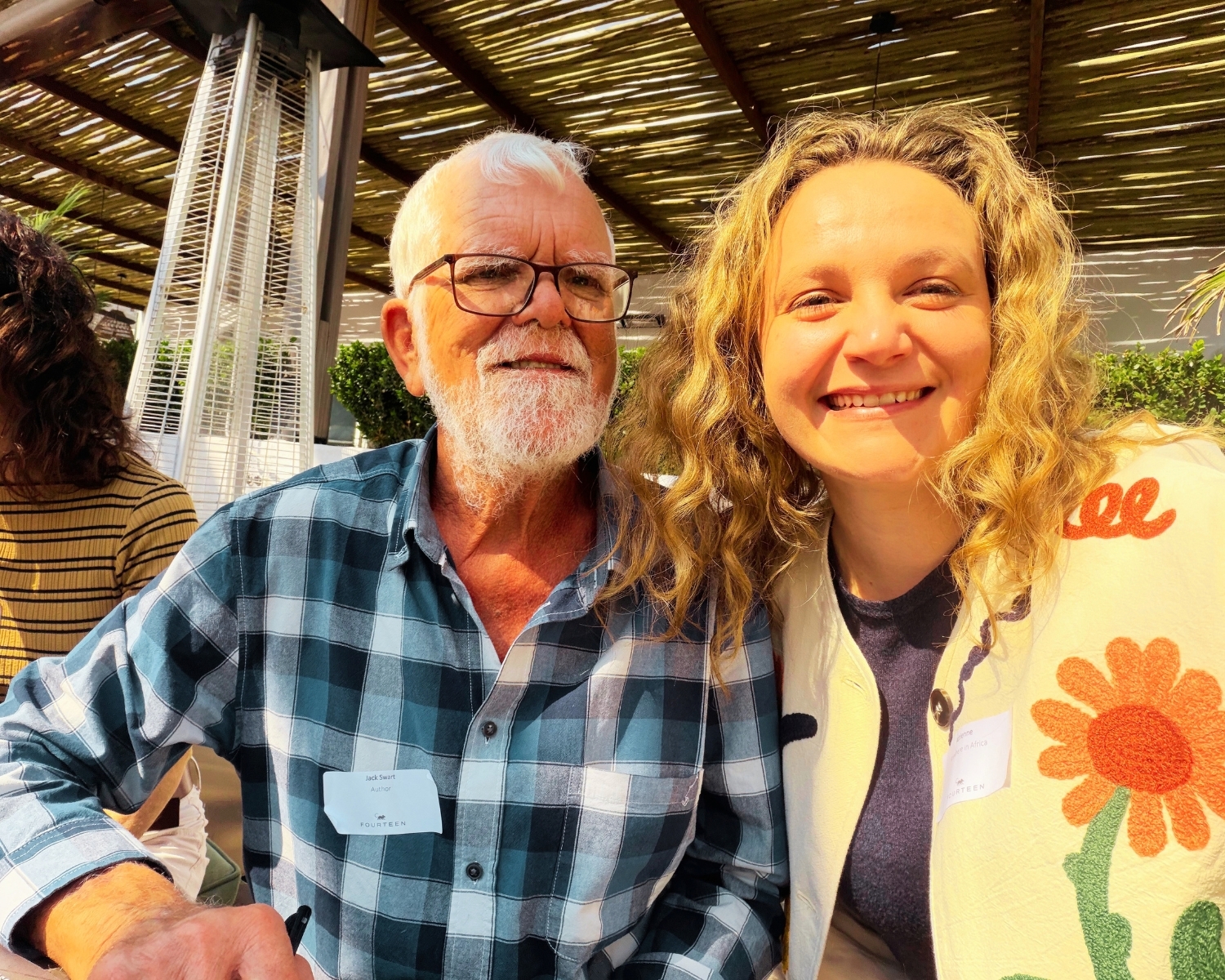
Meeting Jack made something else clear: historical significance doesn't always look the way we expect it to. He is warm, humble and remarkably unassuming, and hearing him speak about those final months gave me an enormous respect for the person behind the historical footnote.
But thankfully, writers like Andrew Russell have helped bring Jack's story back into the light. Russell found Jack and helped him tell his own story in Mandela's Last Prison Guard, documenting the everyday details of life as Mandela's chef, companion and, ultimately, friend at Victor Verster. He is also the author of The Leadership We Need and editor of the second edition of Doing Life with Mandela.

There was something fascinating about the idea that this relatively unknown man, Jack, had spent such an extraordinary period of history in such close proximity to one of the most recognizable people in the world, and then simply went home and carried on with his life.
That is what intrigued me about FOURTEEN.
Over the years, we have been given many ways to encounter Mandela. There are books, documentaries, exhibitions, museums, photographs and the stories of people who knew him. Many of these have given us insight into a man who became so much more than a political leader. But often, our encounters with history are quite passive. We listen to a story, look at a photograph, read a plaque, perhaps stand in the place where something happened, and then move on.
There are very few experiences that allow you to get close to the people behind the history.
What happens when you can sit down and eat food connected to Mandela's time at Victor Verster? When you can hear from someone who was actually there? When you stand in front of a sculpture and learn about the woman who created it, rather than simply knowing the face it represents? When an iconic photograph becomes connected to the person who stood behind the camera?

That was what I was hoping FOURTEEN might offer. And boy did it deliver!
It reminded everyone in attendance why these stories still matter.
Experiencing History Through the Senses
The first thing that struck us about FOURTEEN is that you aren't simply moving from one display to another, gathering dates and facts, oohing and aahing, before heading home.
Instead, the story is built through a combination of food, art, photography, conversation and, most importantly, people.
The experience centres on the final fourteen months of Mandela's imprisonment at Victor Verster, but rather than presenting those months as a neat historical timeline, FOURTEEN gives you the chance to shake hands with the people and taste the details that surrounded Mandela during that time.
We were served a meal inspired by the food Mandela ate during his time at Victor Verster, based on meals prepared by Jack Swart. Obviously, a much more elevated interpretation than anything served in a prison kitchen, but the connection was what mattered.
We tend to remember historical figures through their biggest moments. Yet we don't always think about the ordinary things: what they ate, who they spoke to, who brought them their meals, who they came to trust.

Those details are what begin to turn a historical figure back into a person.
And then there was Jean Doyle.
The woman behind the sculpture
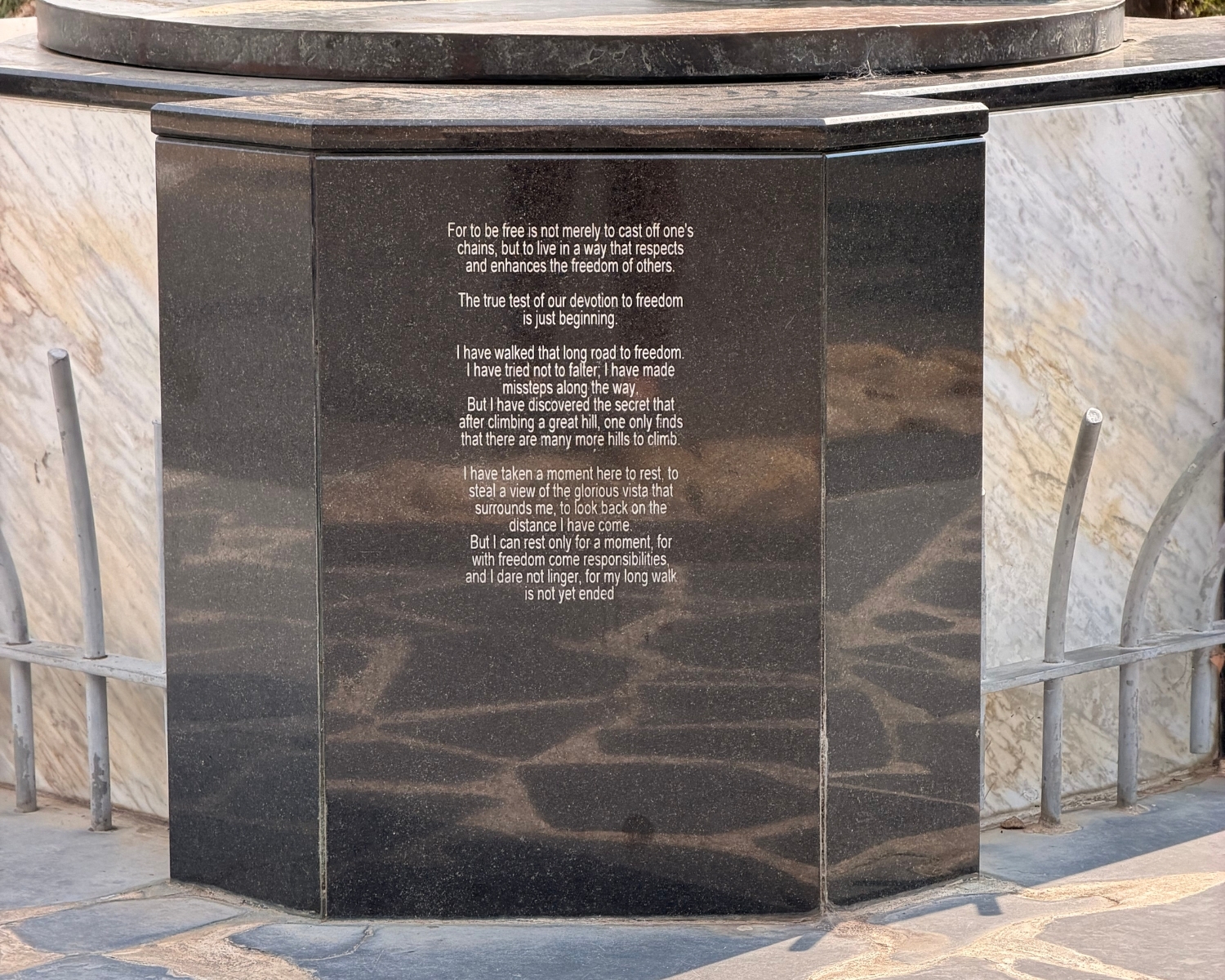
Many South Africans will recognize the sculpture of Mandela walking towards freedom, fist raised, which stands near the site of his release. What I hadn't really considered before visiting FOURTEEN was the woman who created it.
Yes. A woman. Jean Doyle.
Doyle was a trailblazer. At a time when few women - especially South African women - were traveling alone into places most people would have considered too dangerous to enter. Jean traveled into Angola during the war, creating a sculpture for one of the leaders there.
Here was a woman moving through some of the most complex chapters of southern Africa's history, observing, creating and recording the people she encountered. And yet, her name is far less familiar to most of us than the man she sculpted.
That bothered me a little.
Not because Mandela doesn't deserve the recognition he receives, but because Doyle's story is part of the story too. FOURTEEN opens up the dialogue and gives a few very lucky people the chance to meet Jean and find out her incredible life story, as well as Mandela's thoughts on her work.
These are the people I found myself wanting to know more about. The people behind the portraits, behind the headlines, and sometimes, quite literally, behind the sculpture.

The photograph everyone knows
Then there are the photographs.
Most of us have seen the images of Mandela leaving Victor Verster so many times that they have almost become part of our visual wallpaper - yawn! We know the photograph, but how often do we think about the person standing behind the camera?
At FOURTEEN, hearing more about the photographer and the circumstances surrounding those images changed the way I looked at them.
Suddenly, the photograph wasn't simply the photograph of Mandela leaving prison. It was a moment witnessed by a person who had to be there, camera in hand, when history decided to, well, history! Mark Peters has a fascinating story, once living out of his car, to covering stories of war through a visual diary, to pushing his way to the front of the media row to get the iconic photograph of Mandela.
His life story is so interesting, you find yourself having to lift your jaw off the floor in awe. But I won't tell you more as I'd like you to shake hands with Mark and hear it all from him!
What We Carried Home
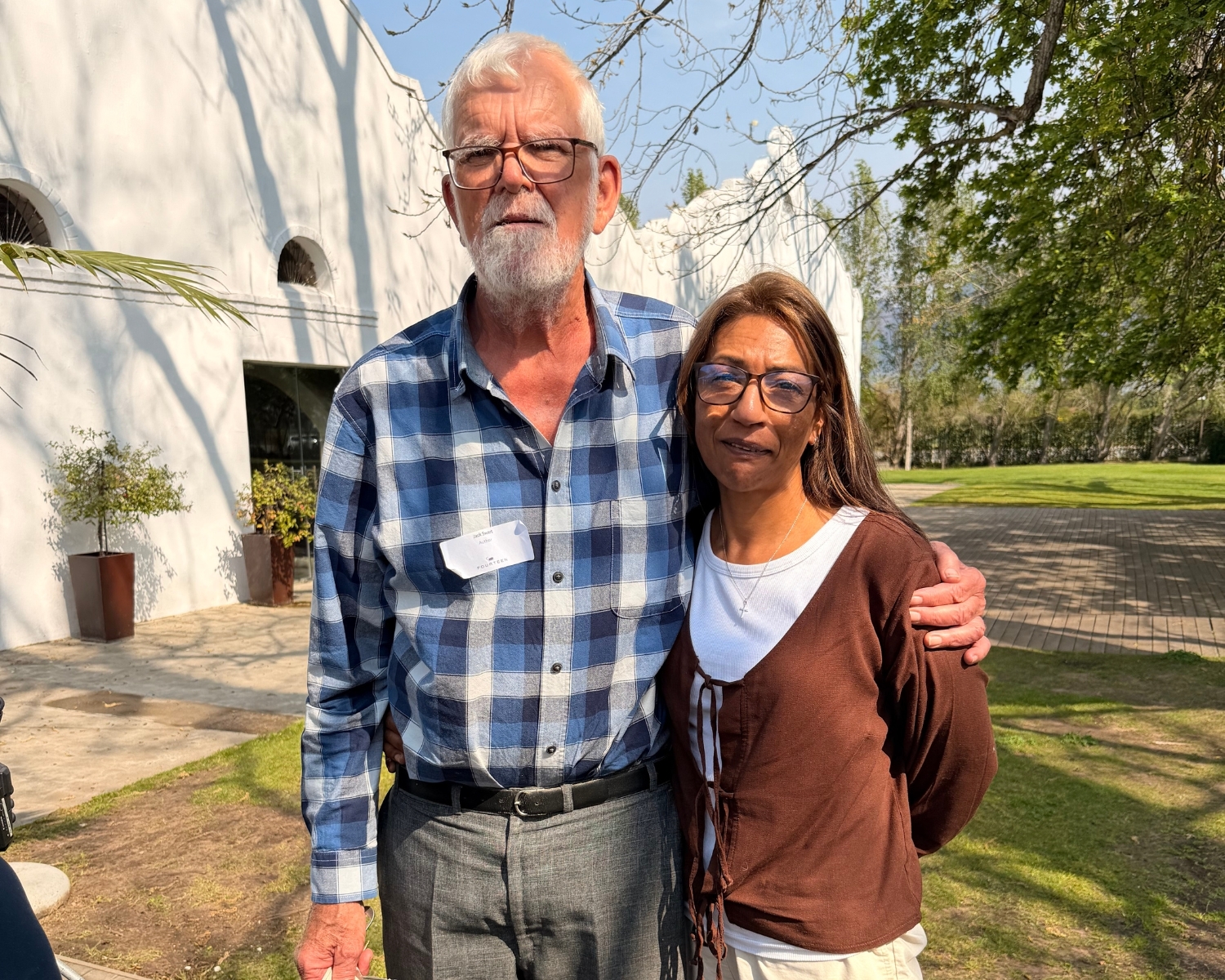
For the Anywhere in Africa Safaris team, there was another layer to the experience.
We spend our working lives telling international travelers about South Africa. We talk about our wildlife and landscapes, our food and wine, our people and our culture. We sell safari knowledge, but really, we sell the opportunity to experience a place and understand something of what makes it special.
Our history is part of that too.
It is complicated, painful and, at times, difficult to reconcile with the country we are today. But standing so close to the place where Mandela walked out of prison, while hearing the stories of the people who were there during those final months, reminded us that South Africa's story isn't only one of what happened to us.
It is also a story of what people chose to do with what happened.
We walked away with a renewed sense of pride in South Africa, but also something I didn't expect to feel quite so strongly: hope in humanity.
FOURTEEN reminded us that history is also shaped by the people who cooked the meals, took the photographs, made the sculptures, opened the gates and carried on with their lives afterwards. And perhaps that is where the hope lies: in the extraordinary things ordinary people can do when history places them in extraordinary circumstances.
If this sounds like an experience you'd like to have for yourself, get in touch with Kirsty Gordon at Anywhere in Africa Safaris. She'll take care of the arrangements and help you experience FOURTEEN for yourself, including the stories, people, food and history that made it so memorable for us.
